
Insights · Seasonal beaches
Digitising a beach club: what pays off and what doesn't
“Digitising the beach” means nothing on its own, because it covers four different jobs with different costs, timescales and benefits. Telling them apart is the most useful part of the choice, and it is done before looking at any quote.
Four jobs, not one
Those selling software in this sector often start from a single promise: everything in one system. Those running a beach operation, however, have four separate problems, and it pays to keep them separate even when the same supplier solves them.
The first is occupancy: who is where. Umbrella map, bookings, season-pass holders, beach huts. It is the administrative heart of the operation and, for most beaches, the first job to have been digitised — often many years ago.
The second is takings: till, price lists, receipts, end-of-day closing. It has its own tax constraints and changes with the regulations, so it should be treated as a chapter of its own.
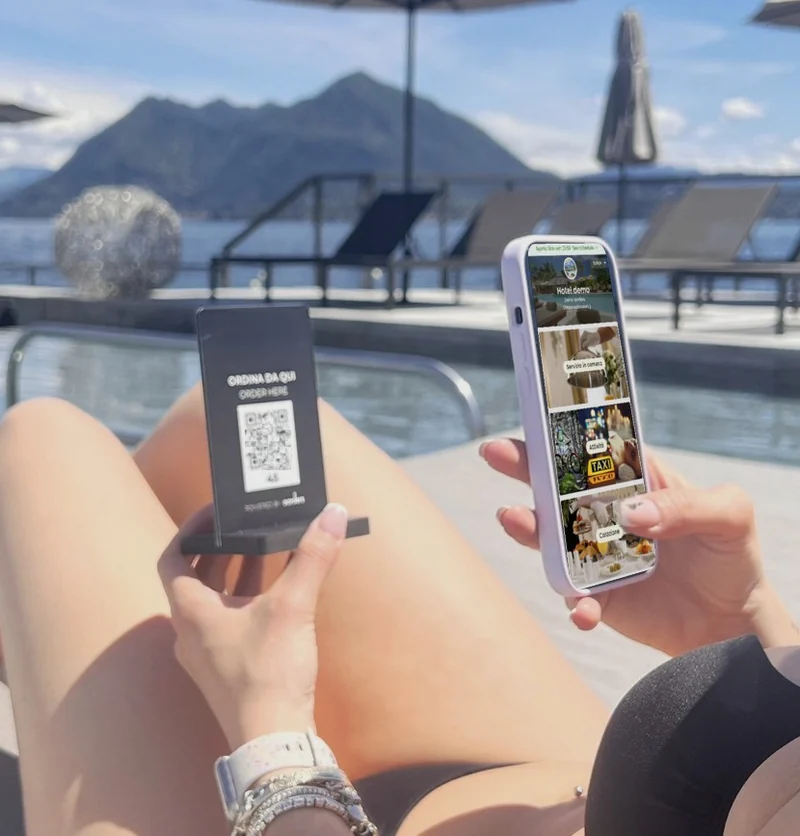
The third is service: what the people already inside consume. It is the part almost nobody looks at, because for decades it has been done by voice and from memory.
The fourth is the relationship: who your guests are, who comes back, who has a season pass, who remembers you in February.
None of the four is more important than the others in absolute terms. But their returns are very different, and it isn't worth tackling them all at once.
The third job is the one that pays off fastest
Occupancy and takings, at most beach operations, are already managed in some way: a program, a spreadsheet, a till. They work — sometimes badly, but they work. Redoing them is an expensive job that improves something already in place.
Service, on the other hand, at most beaches isn't managed at all. Guests order when someone walks past, or when they get up. There is no tool to replace: there is a gap to fill. That is why it is the chapter with the fastest return, and also the least risky one: nothing that already keeps the season standing gets touched.
The sector is moving, but not en masse
That the sector is digitising is documented: in 2024 the trade press reported that 2,500 Italian beach operations had adopted online solutions (Mondo Balneare). That figure should be read alongside another: Italy counts 7,244 businesses specialising in running beach establishments according to Unioncamere-Infocamere data for the end of 2023, while a SIB-Confcommercio survey counts 6,318 (True Numbers, Mondo Balneare).
These are two sources with two different numbers, and they should neither be added together nor presented as a single figure. But the proportion they suggest is useful: digitisation is not yet the norm, and it is concentrated mainly on the first job, occupancy.
Five questions to ask anyone who offers you something
“Which of the four jobs do you solve?” If the answer is “all of them”, ask which one you do best. No product does four things equally well.
“What do I have to stop using?” A supplier who asks you to replace everything is also selling you a house move, with all the risks that brings once the season has started.
“What happens if the connection on the beach comes and goes?” It is the physical constraint of the sector, and any vague answer is a problem.
“Who sets it up, and who supports us in the first week?” At a beach operation, the first week of July is nothing like a trial run.
“What happens in October?” A season of four or five months and a year-round commitment are not the same thing. It is legitimate to ask beforehand, not afterwards.
Two Italian details that are often forgotten
A digital-only menu doesn't replace the obligation to display prices. Italian regulations require the list of items and prices to remain available for consultation, and refusing a paper menu to someone who asks for one has been treated as an unfair commercial practice (Il Fatto Alimentare). In practice: a digital menu sits alongside the displayed price list, it doesn't cancel it. Anyone telling you otherwise is making your life simpler at your own risk.
Tax and information obligations remain yours. Whatever tool you choose, receipts, commercial documents and mandatory information should be checked with your own adviser, not with the software supplier.